The lives behind
the labels.
We call one of them family and the rest of them dinner. Scroll through the life of each, how it is born, what is done to it, and how it ends. Every claim is cited.
Scroll↓

File 01 / 09
Dog
What we’re told“She’s family.”
Photo: digital_image_fan, Wikimedia Commons (CC BY 2.0)
You already know how to feel about her.
You’d defend her. If someone hurt her for fun, you’d call it cruelty. So would anyone. This page only asks one thing: hold that feeling steady while the species changes.
A life, start to finish
Born, and kept with her mother
She stays with her mother and litter for the first weeks of life. We consider taking a puppy away too early a harm worth regulating.
Named, and brought home
She gets a name, a vet, a bed, a collar with your phone number on it, so that if she is ever lost, she comes back to you.
Walked, fed, talked to
You learn her personality. You notice when she is anxious or in pain. You arrange your day around her. When you go away, you worry about who will look after her.
We spend whatever it takes
Pain relief, surgery, medication, many people spend thousands of pounds, and sit up through the night, to give a dog a little more time. Hurting her for pleasure would be a crime.
Protected by lawShe dies old, and we grieve
She lives a full life, ten to fifteen years or more. When she dies we mourn her, bury or cremate her, and remember her for years. She was someone.
Nothing that follows asks you to feel something new. Only to stop making one exception.
Source: The control. No citation needed, you supplied the evidence yourself.
File 02 / 09
Pig
What we’re told“It’s humane slaughter.”
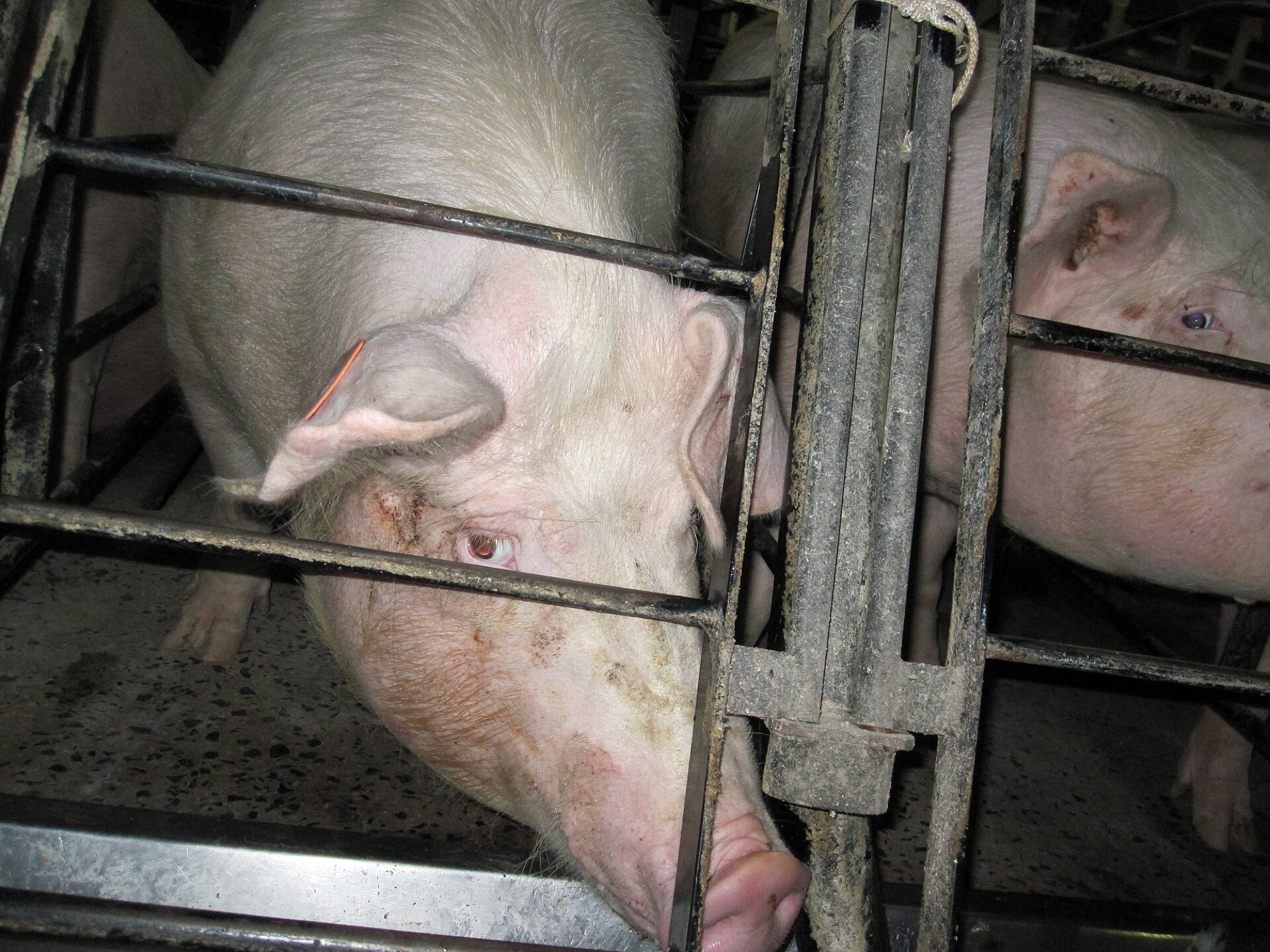
Photo: Mercy For Animals, a sow in a gestation crate (CC BY 2.0)
Lowered, in groups, into a pit of gas.
The CO₂ turns to acid on her eyes, snout and throat. Air hunger, the panic of being held underwater, for up to a minute before she blacks out. She solves problems as well as a dog. She dreams.
A life, start to finish
Born in a crate she cannot turn around in
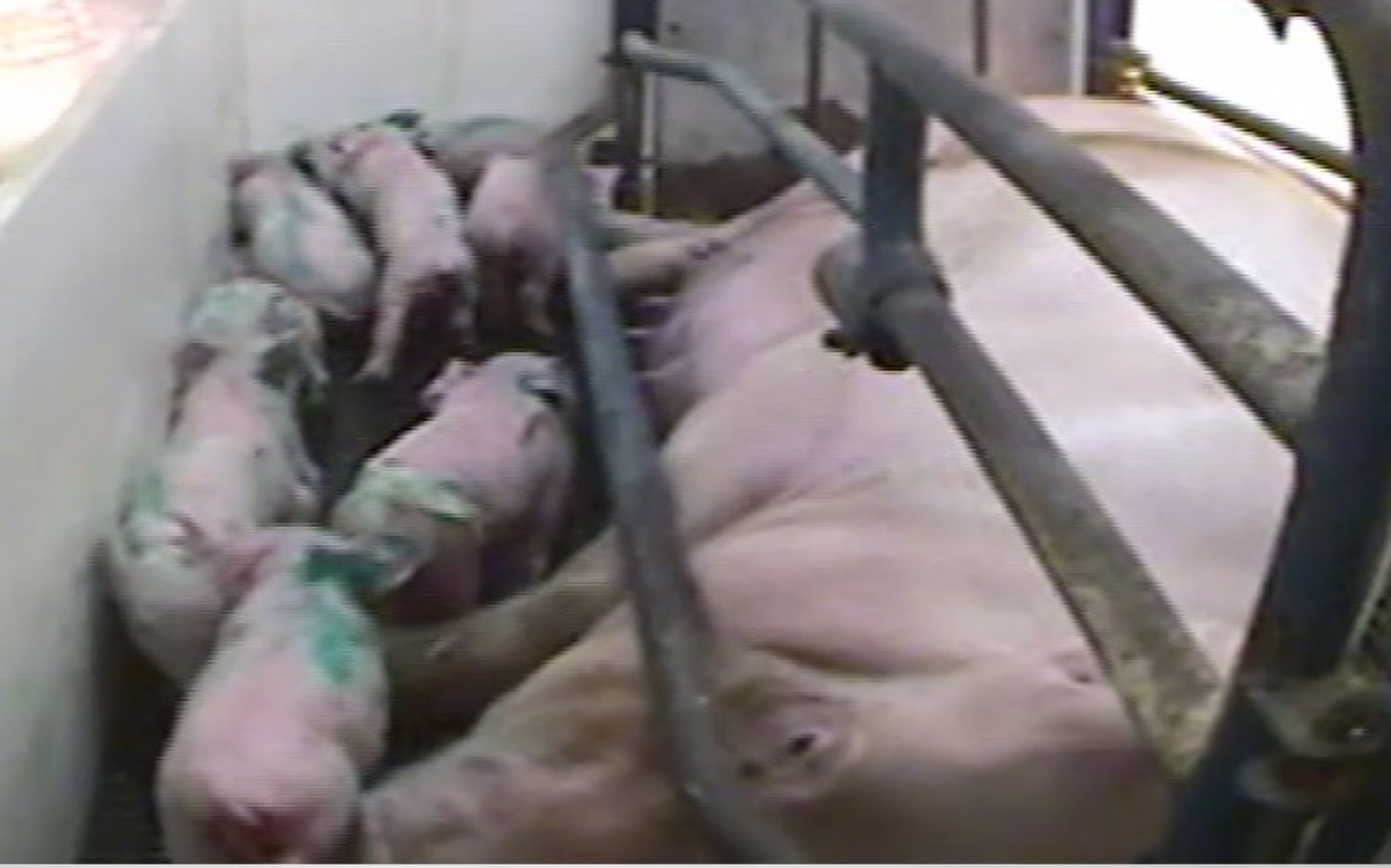
Most mother pigs give birth in a farrowing crate, a metal frame so narrow she cannot turn to reach her piglets. She may spend weeks in it. A sow is as clever as a dog and builds a nest when she can; here she lies on concrete and steel.
Tail cut, teeth clipped, castrated, awake
Within his first days a piglet routinely has his tail cut off and his teeth ground or clipped, and males are castrated. In the EU this is permitted in the first week of life with no anaesthetic and no pain relief. He screams; there is nothing for the pain.
Usually no anaestheticWeaned early, packed into a fattening pen
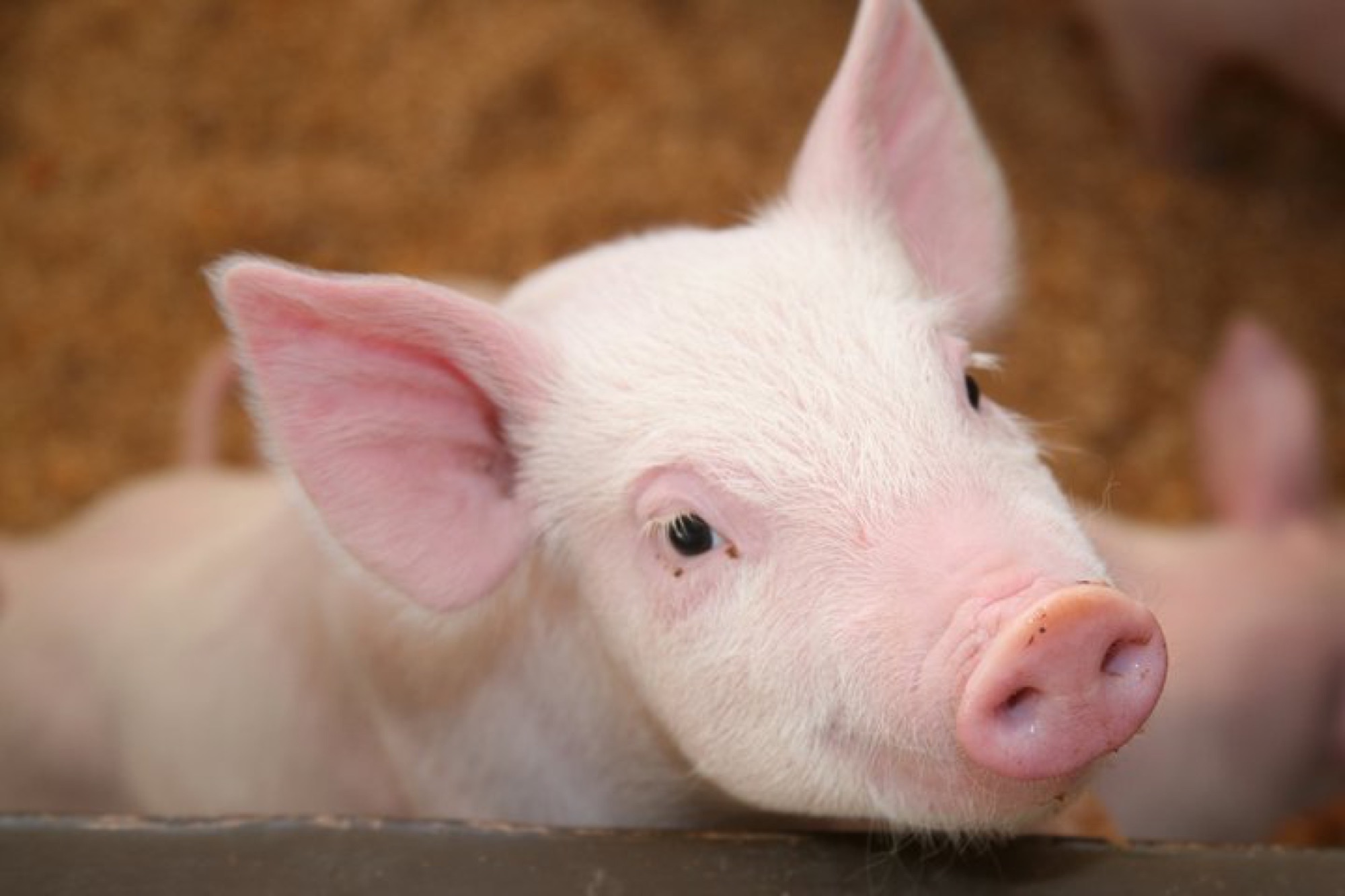
Taken from his mother far younger than he would naturally leave her, he is moved to a barren pen on slatted concrete and fed to grow as fast as possible, no straw, no soil, nothing to do with a curious mind.
Loaded onto the truck
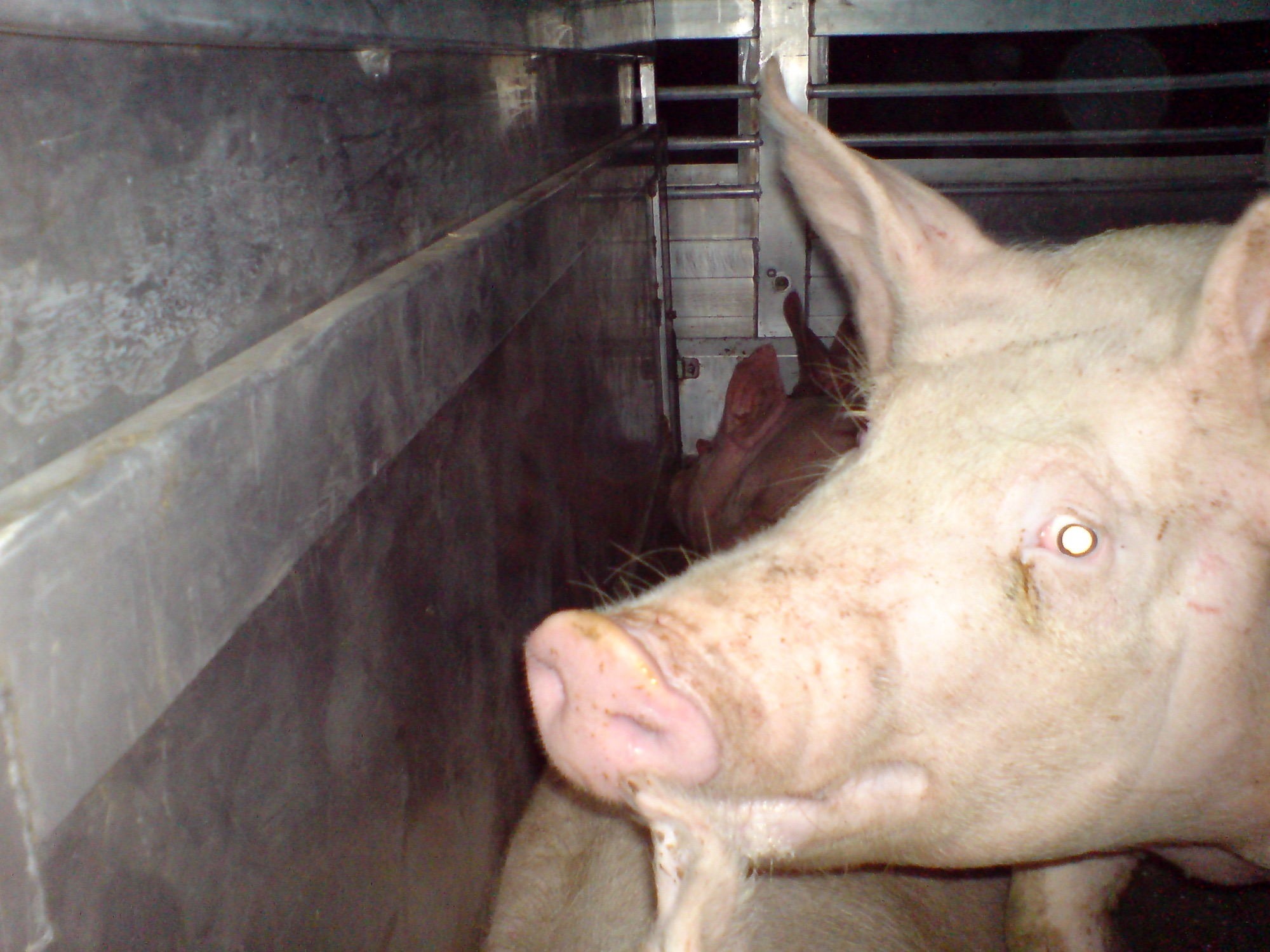
At around half a year old, a fraction of a pig’s natural 15–20 years, he reaches slaughter weight and is loaded for transport, often for hours, in all weather.
Lowered into the gas
Around 90% of pigs in England and Wales are killed by being lowered, in groups, into a pit of high-concentration CO₂. The gas burns; they shriek and climb over one another, conscious for up to 30 seconds or more. The government’s own advisers called for it to end in 2003.
Legal & standardThe government’s own advisers said ban it, in 2003. It is still the standard method.
Source: Animal Welfare Committee (2025); FSA Slaughter Sector Survey 2024; EFSA (2020); Marino & Colvin (2015).
File 03 / 09
Chicken
What we’re told“It’s just a chicken.”
Photo: Andrew Skowron / Otwarte Klatki (CC BY 2.0)
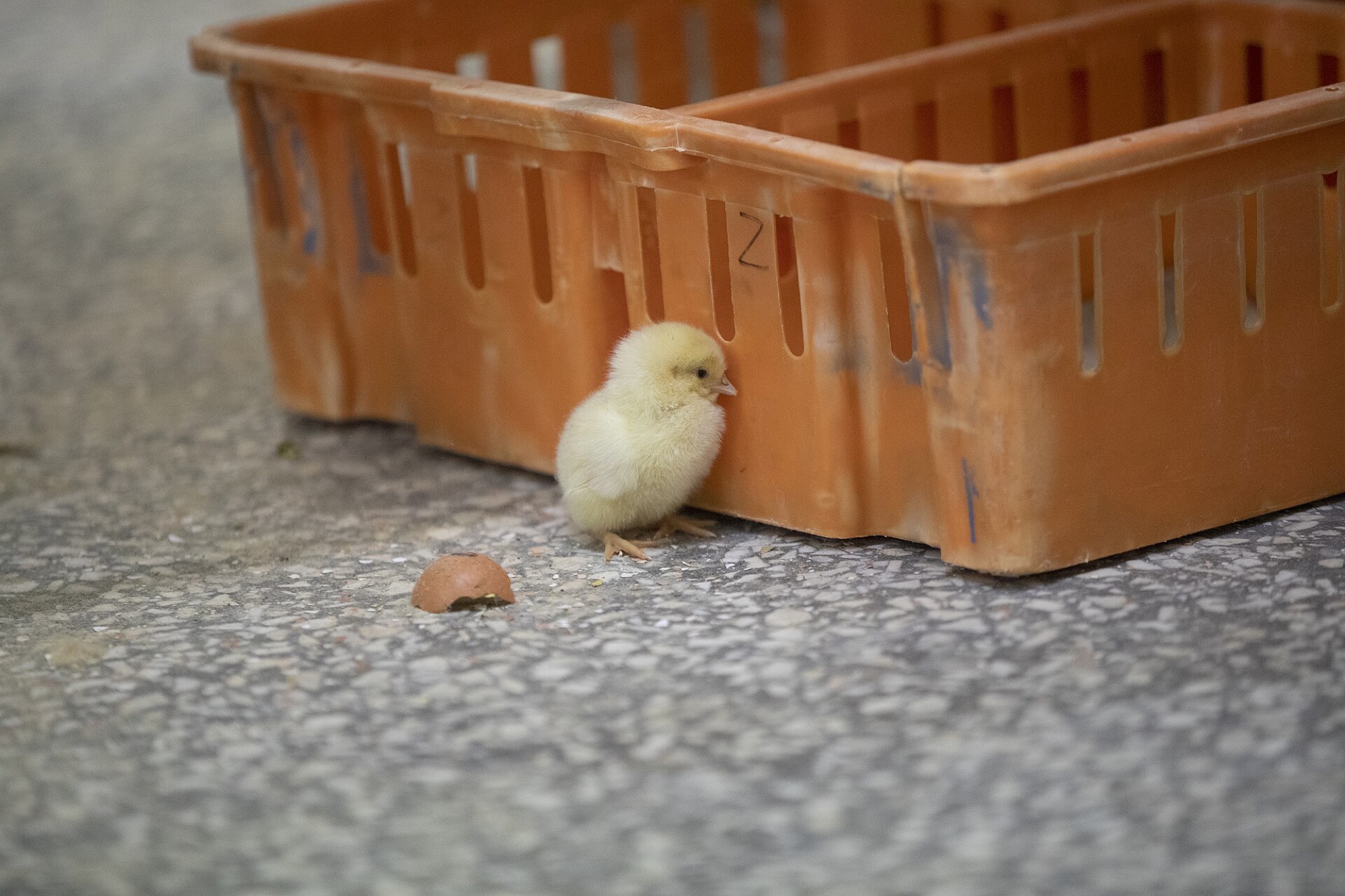
Killed at six weeks old, still cheeping like a chick.
Bred to grow so fast their hearts and legs collapse under their own weight. She shows a rudimentary sense of number. She can anticipate the future. The future is six weeks long.
A life, start to finish
Hatched in a tray, never meeting a hen
She hatches in an industrial incubator and never sees a parent. In the egg industry, her brothers are useless, they can’t lay, so the male chicks are killed on their first day, ground up alive or gassed. Billions of them, every year.
Male chicks: killed on day oneBred to grow until her body breaks
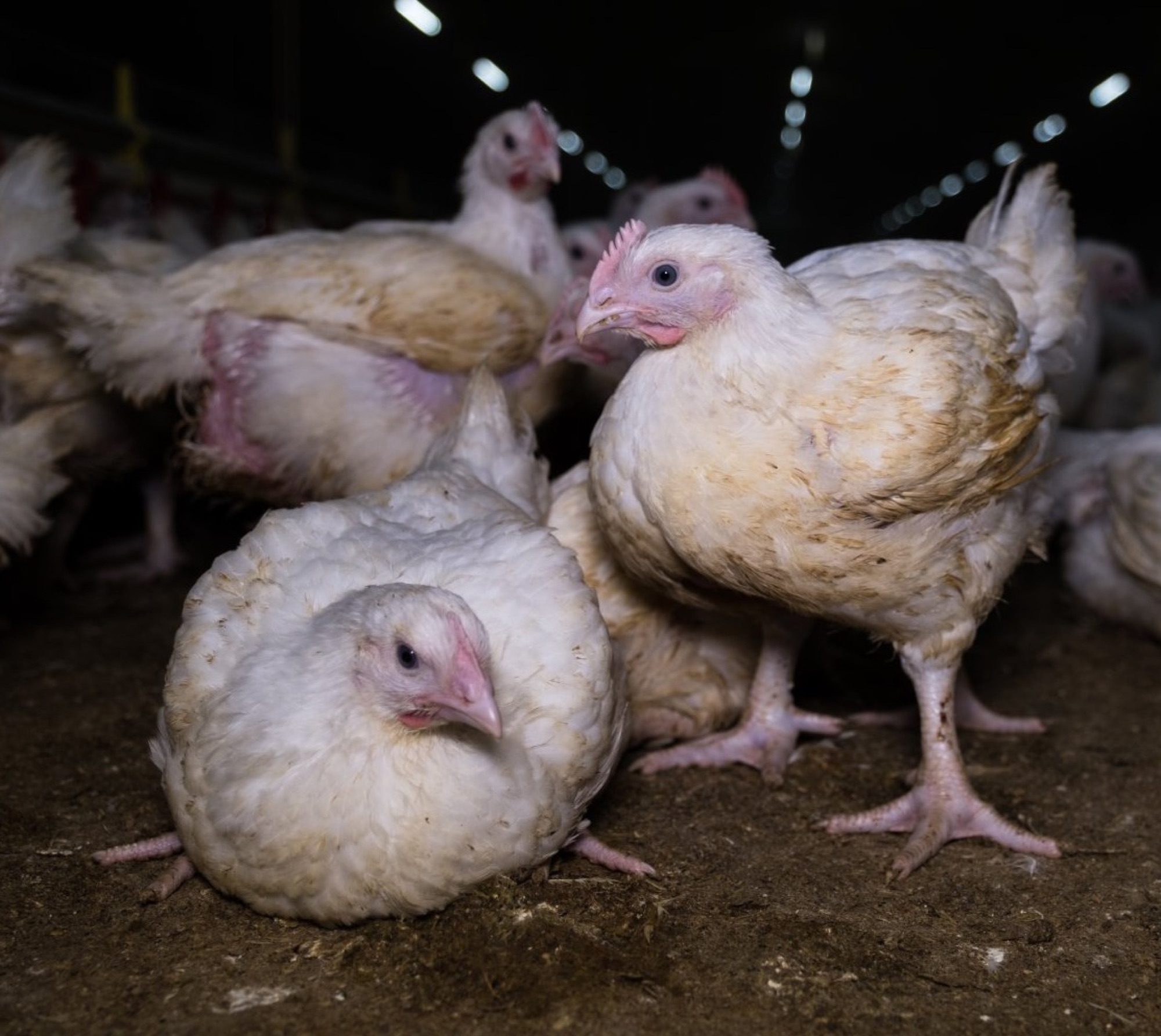
A modern broiler grows several times faster than a chicken did in the 1950s. Her legs and heart cannot keep up with the breast the industry selected for; many go lame or die of heart failure inside the shed, which is all she will ever know.
Grabbed by the legs, crated, trucked
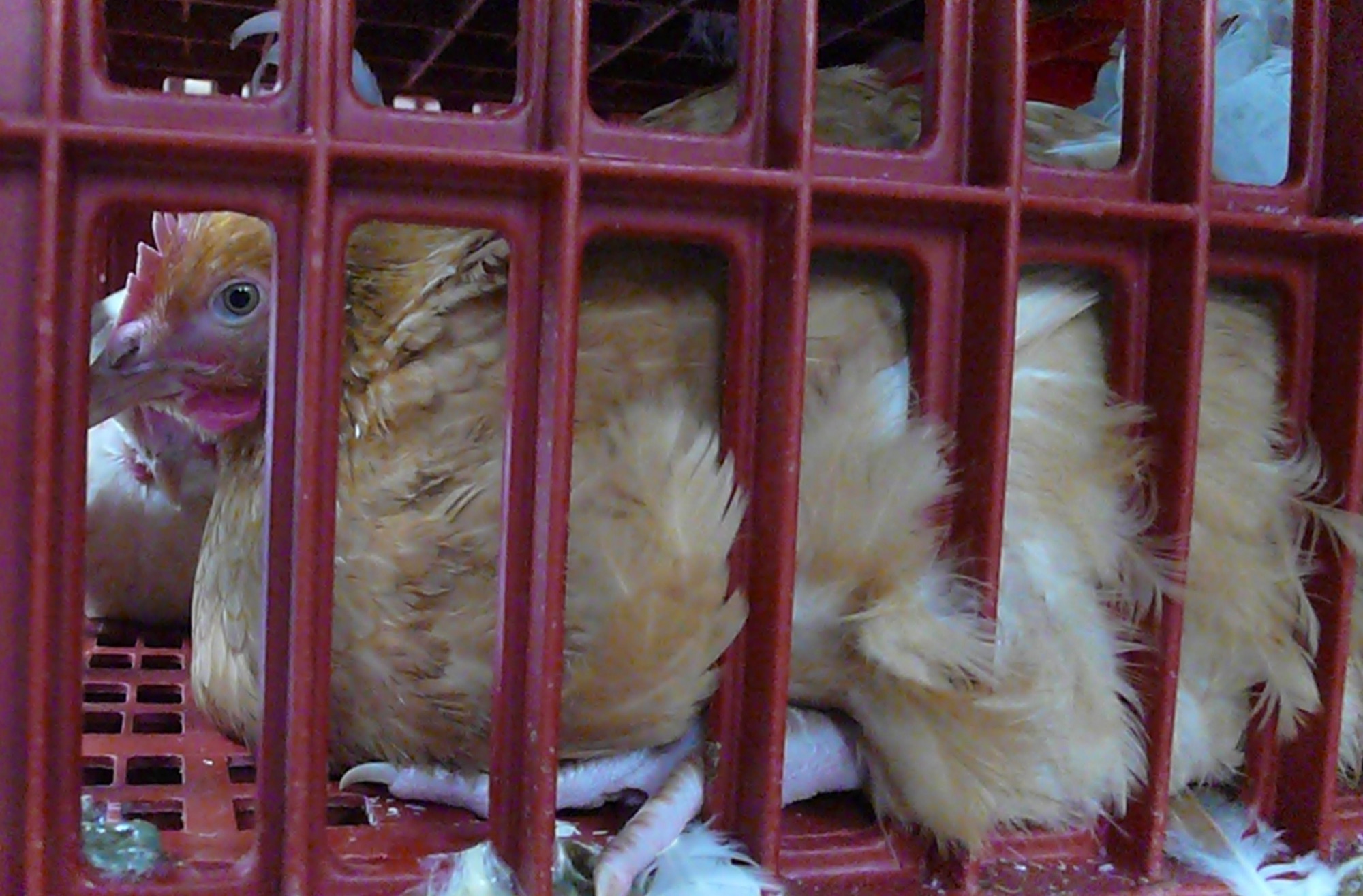
At around six weeks, still cheeping like the chick she is, she is caught by the legs, often several birds to a hand, packed into crates and driven to the abattoir.
Shackled upside down at six weeks
She is hung by her feet from a moving line, her head drawn through an electrified water bath, and her throat cut. More chickens are killed each year, over 70 billion, than every other land animal on Earth combined.
Killed at ~6 weeksMore chickens are killed each year than every other land animal on Earth combined.
Source: FAO / Our World in Data (2021); RSPCA; Marino, “Thinking Chickens” (2017).
File 04 / 09
Turkey
What we’re told“It’s the centrepiece.”
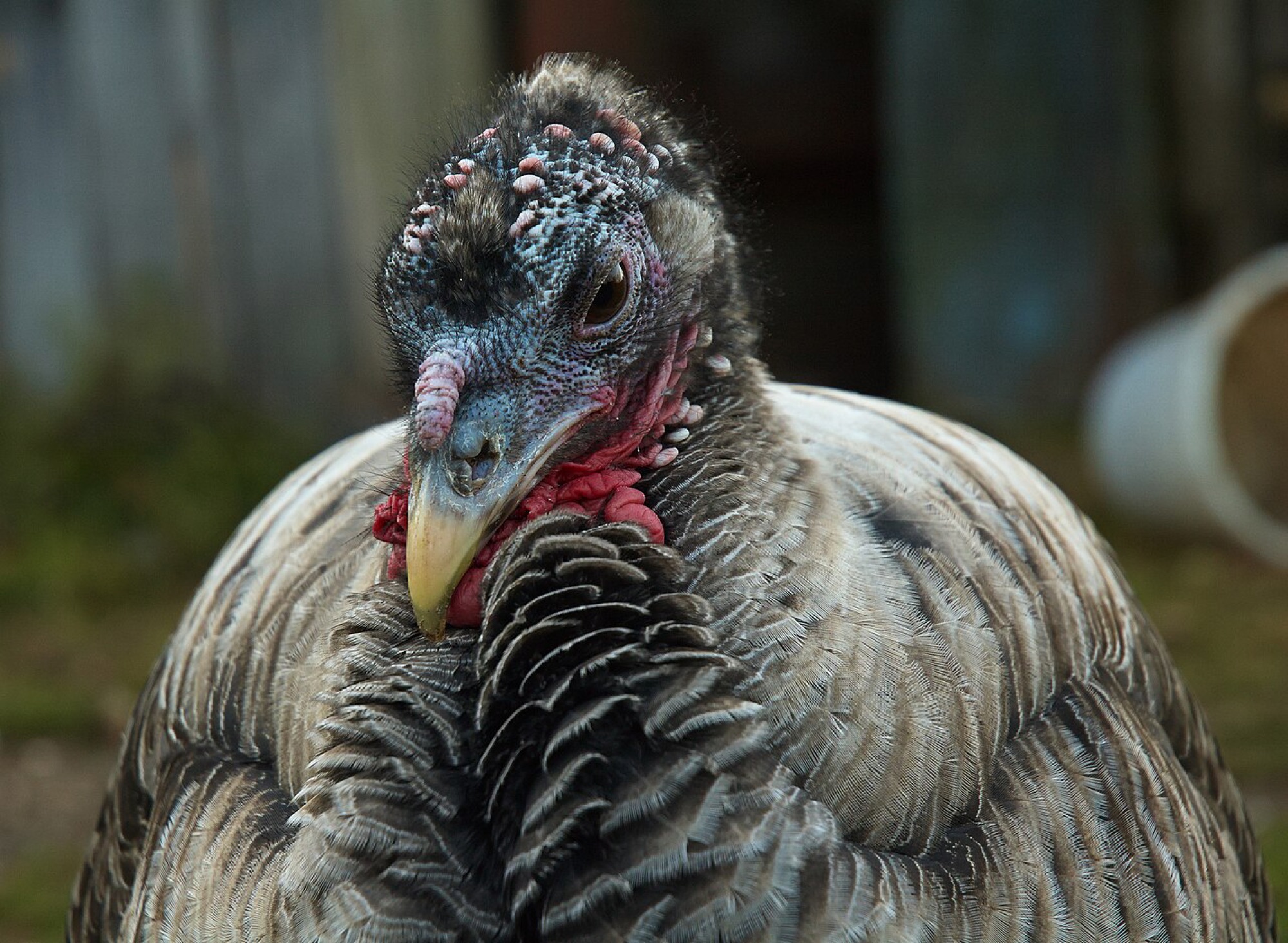
Photo: Dmitry Makeev, Wikimedia Commons (CC BY-SA 4.0)
Bred so heavy he can no longer mate.
The commercial turkey has been selected for so much breast meat that he physically cannot reproduce, every single one is conceived by artificial insemination. He is a bird who can no longer make another of himself without us.
A life, start to finish
Out of an incubator, beak and toes trimmed
Poults hatch in a hatchery and are routinely beak-trimmed and de-toed, parts of the beak and toes cut off without pain relief, to limit the injuries that crowding causes.
Usually no anaestheticGrown to twice a wild turkey’s weight
Selective breeding has roughly doubled their size since the 1960s. The same breast meat we buy leaves them lame, breathless and unable to mate, so the species is kept going entirely by artificial insemination.
Killed as the centrepiece
A turkey can live around ten years. We kill them at a few months, shackled, stunned in an electric water bath and bled, so that the table has a centrepiece for a single afternoon.
Killed at months oldA body engineered past the point of working, for one meal a year.
Source: Aviagen/BUT breeding data; RSPCA; USDA.
File 05 / 09
Dairy Cow
What we’re told“The milk was spare.”
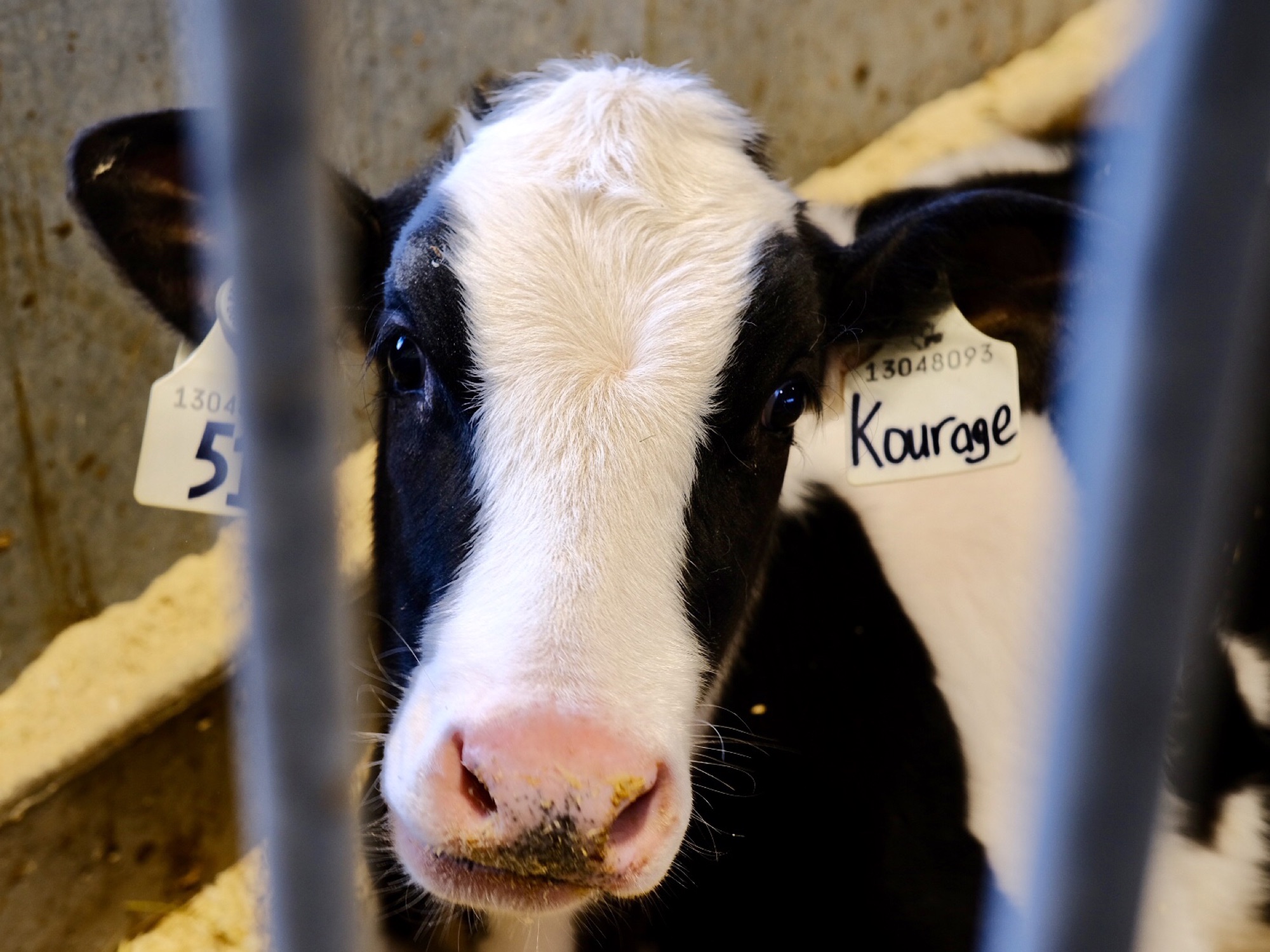
Photo: Joanne Clifford, a dairy calf, ear-tagged (CC BY 2.0)
Her calf is taken within a day. She bellows for days.
She is forcibly impregnated so she lactates, and her baby is removed so you can have what was meant for it. Her son becomes veal. When her yield drops, she goes the way of every animal on this page.
A life, start to finish
Born, and taken from her mother
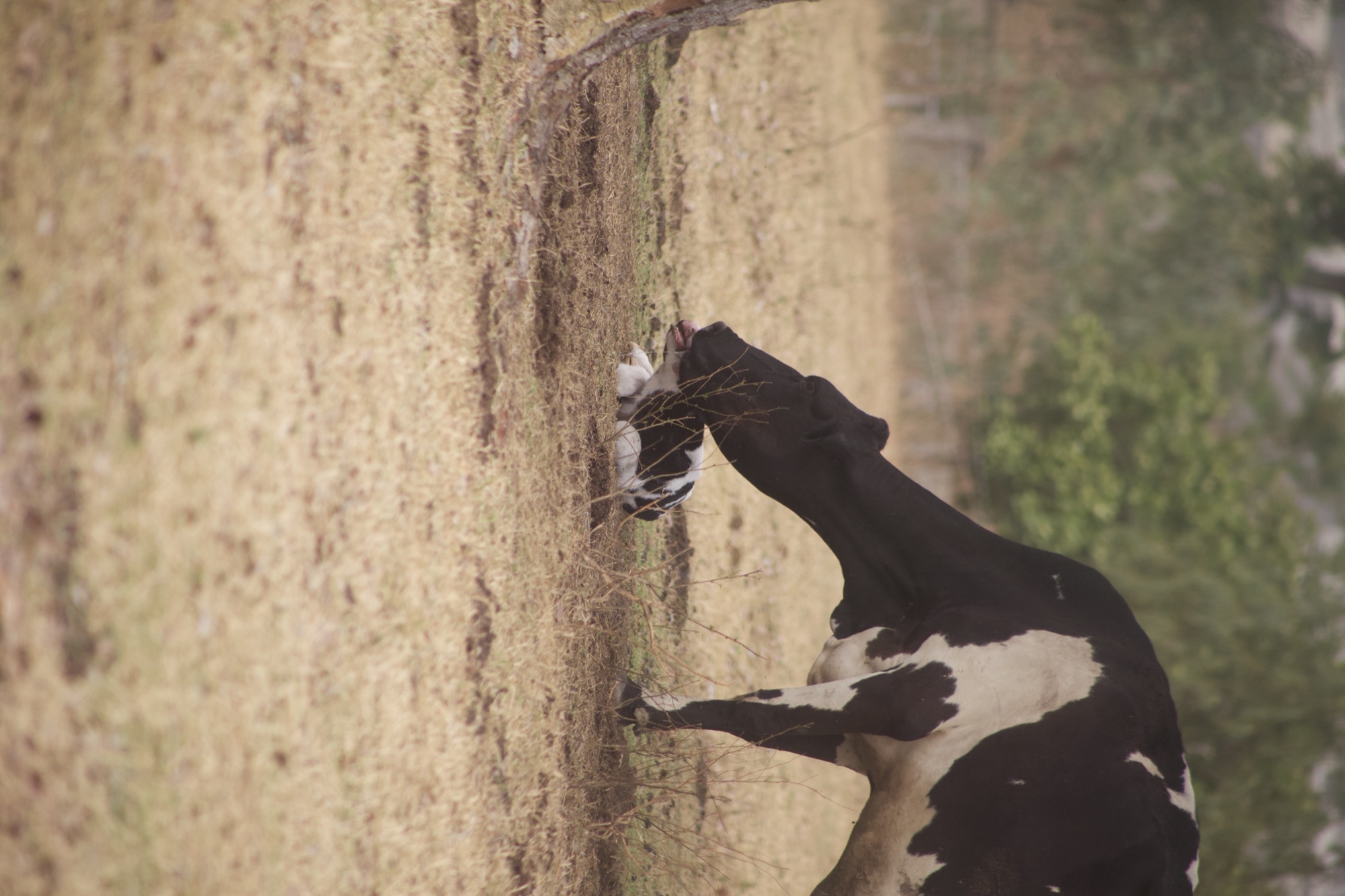
Like the calf she will one day lose, she is separated from her own mother within hours or a day. Cows and calves bond fast and call out for each other for days after they are parted.
Restrained and made pregnant
She is artificially inseminated while held in a restraint, and carries a calf for nine months. A cow only gives milk because, like any mammal, she has had a baby. To keep the milk flowing, she is impregnated again and again.
Forcibly impregnatedHer calf is taken so we can take the milk
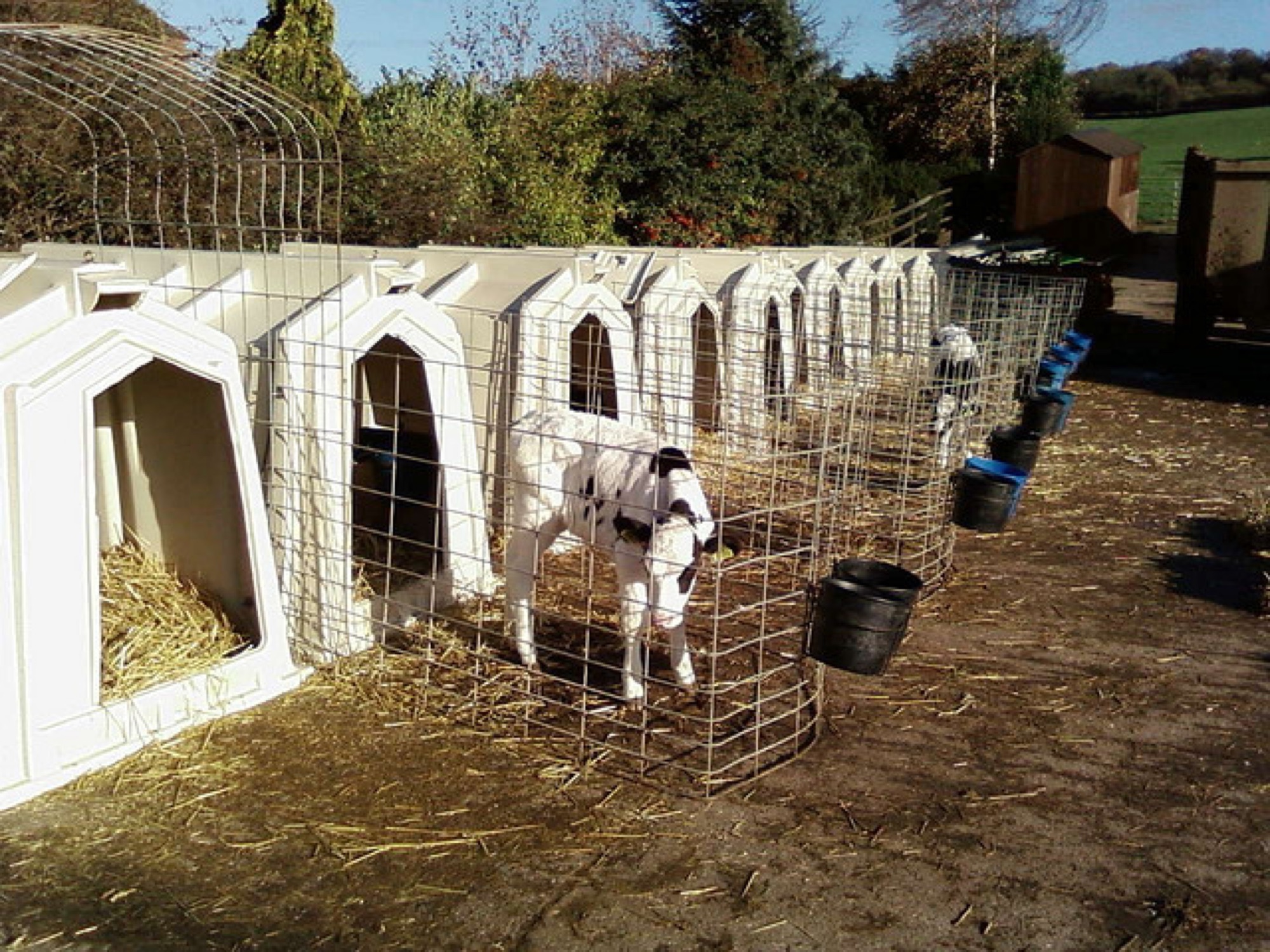
Within a day, her calf is removed. If he is male, he is near-worthless to the dairy: shot soon after birth or raised for veal in a hutch. The milk that was made for him is sold.
Milked, pregnant, milked again
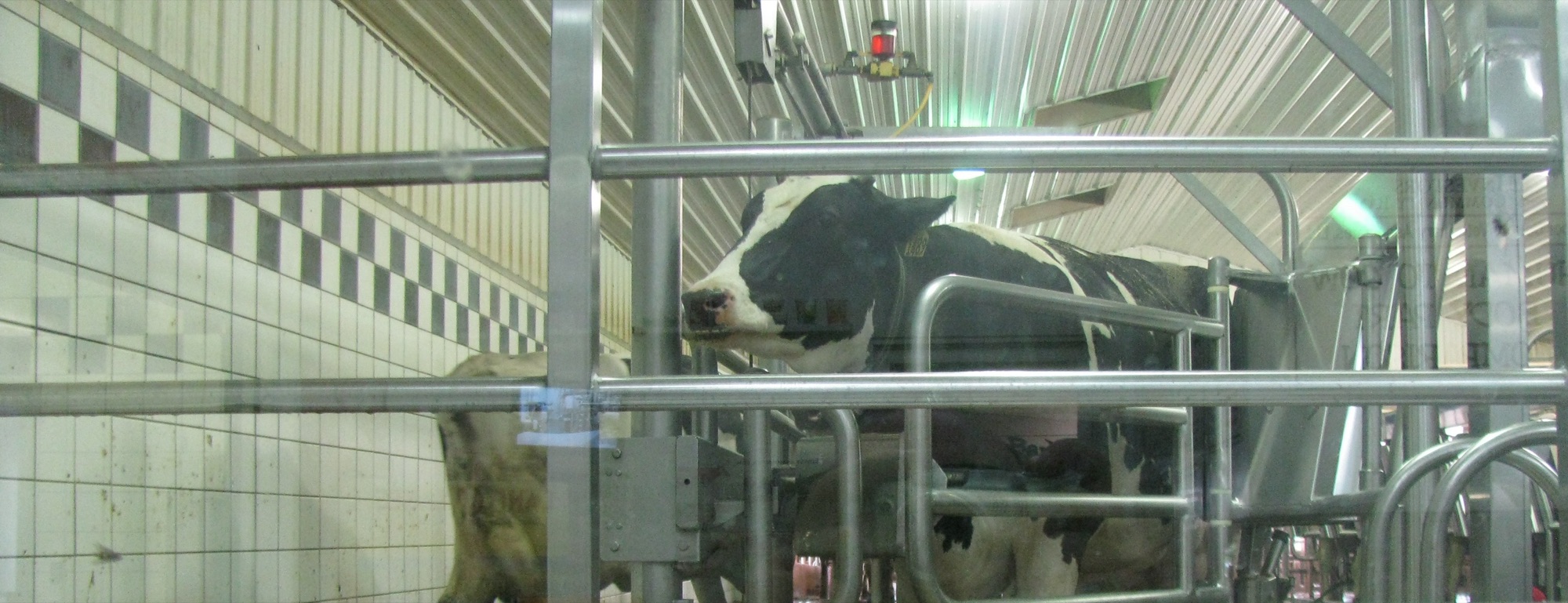
She is milked for around ten months while pregnant with the next calf, pushed to yield far more than nature intended. The cycle, pregnancy, birth, loss, milking, repeats every year until her body fails.
Spent, and slaughtered anyway
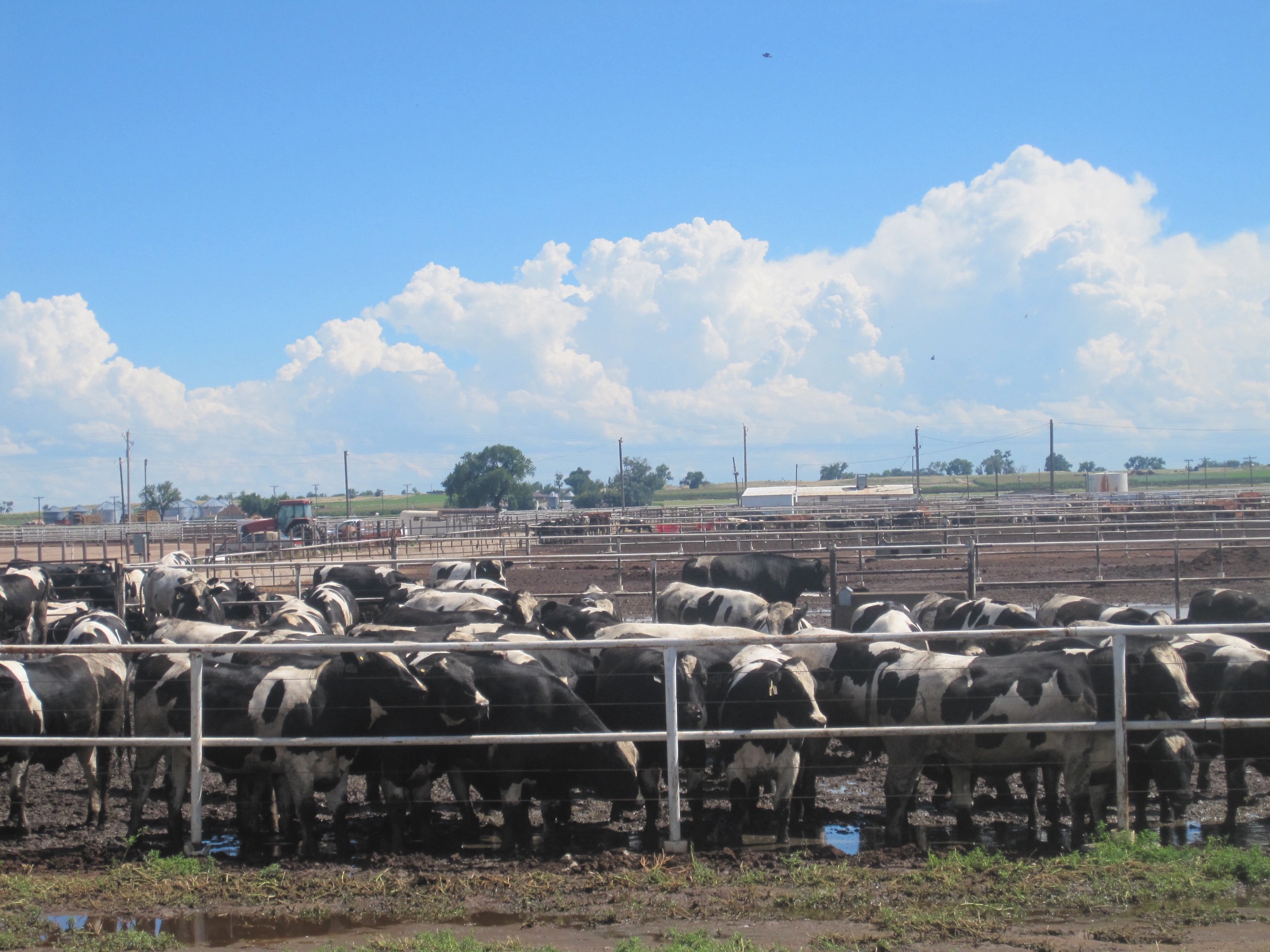
A cow can live around twenty years. When her yield drops at four to six, she is “spent”, worn out, and sent to slaughter for cheap beef, the same end as every animal on this page.
A quarter of her natural lifeSpent by five, killed at a quarter of her natural life.
Source: Compassion in World Farming; EFSA.
File 06 / 09
Lamb
What we’re told“Spring lamb.”
Photo: Volatus, Wikimedia Commons (CC BY 3.0)
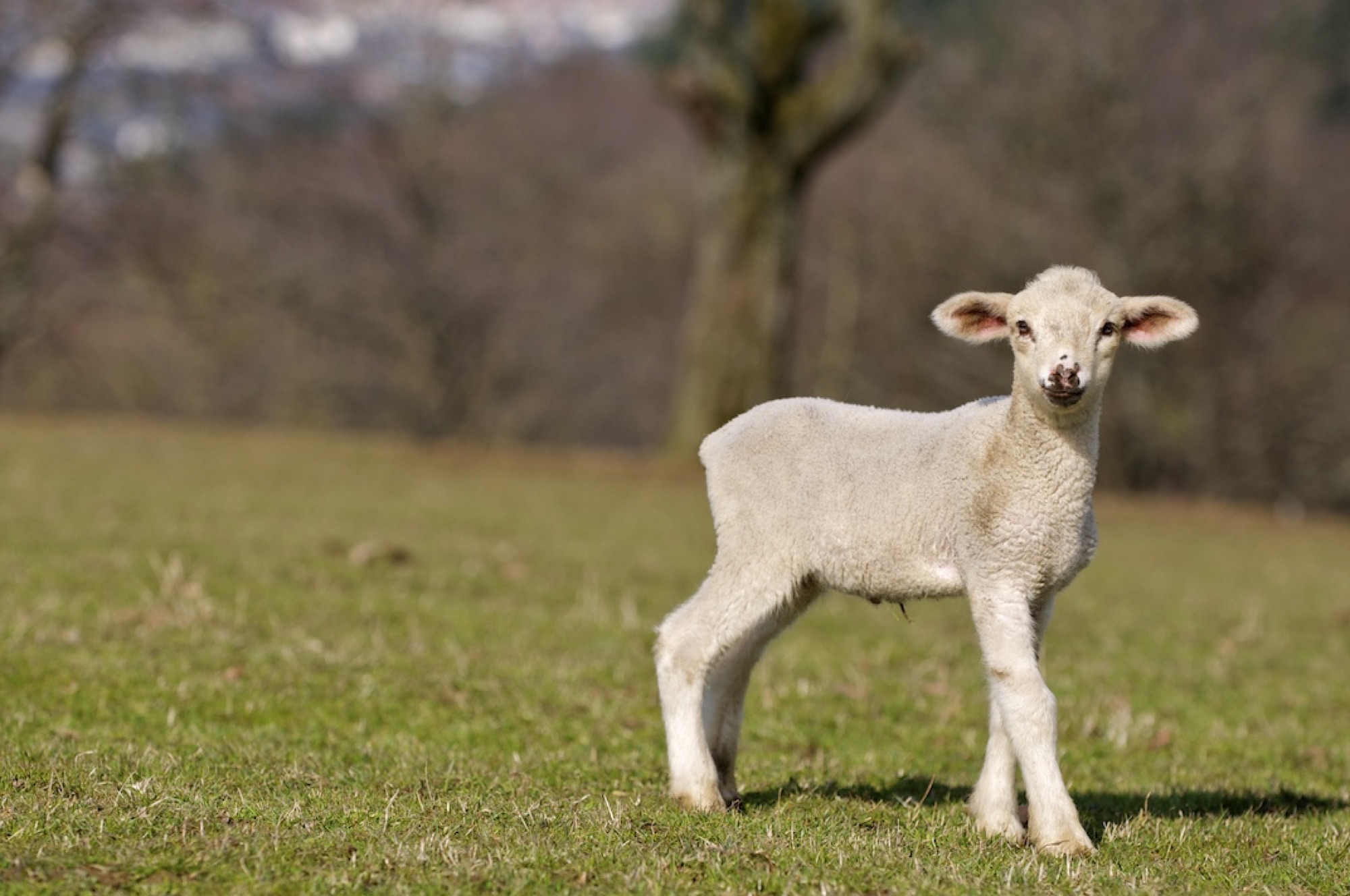
The “spring lamb” on the plate is a baby.
A sheep can live twelve years. The one sold as Sunday roast was a few months old, still following its mother. We almost never let one reach its first birthday.
A life, start to finish
Born in a field, beside his mother
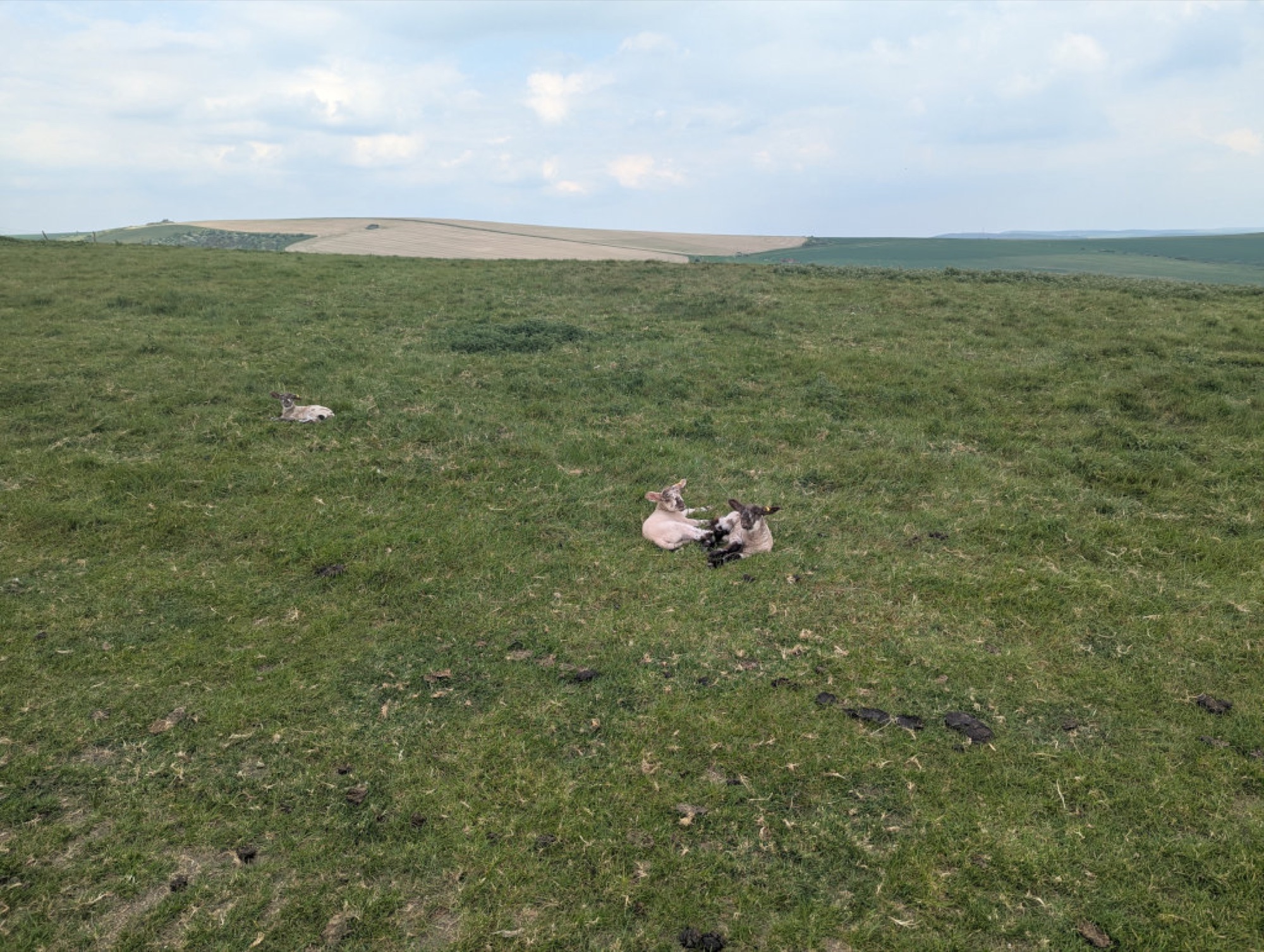
This is the part we put on the packaging: lambs in green fields. It is real, and it is brief. He stays close to his mother and would, if left alone, live well over a decade.
Tail and testicles ringed off, awake
Within his first weeks his tail is docked and he is castrated, most commonly with a tight rubber ring that cuts off the blood supply until the flesh dies and drops away. It is legal to do this with no pain relief.
Usually no anaestheticSheared at speed, and, for Merino, mulesed
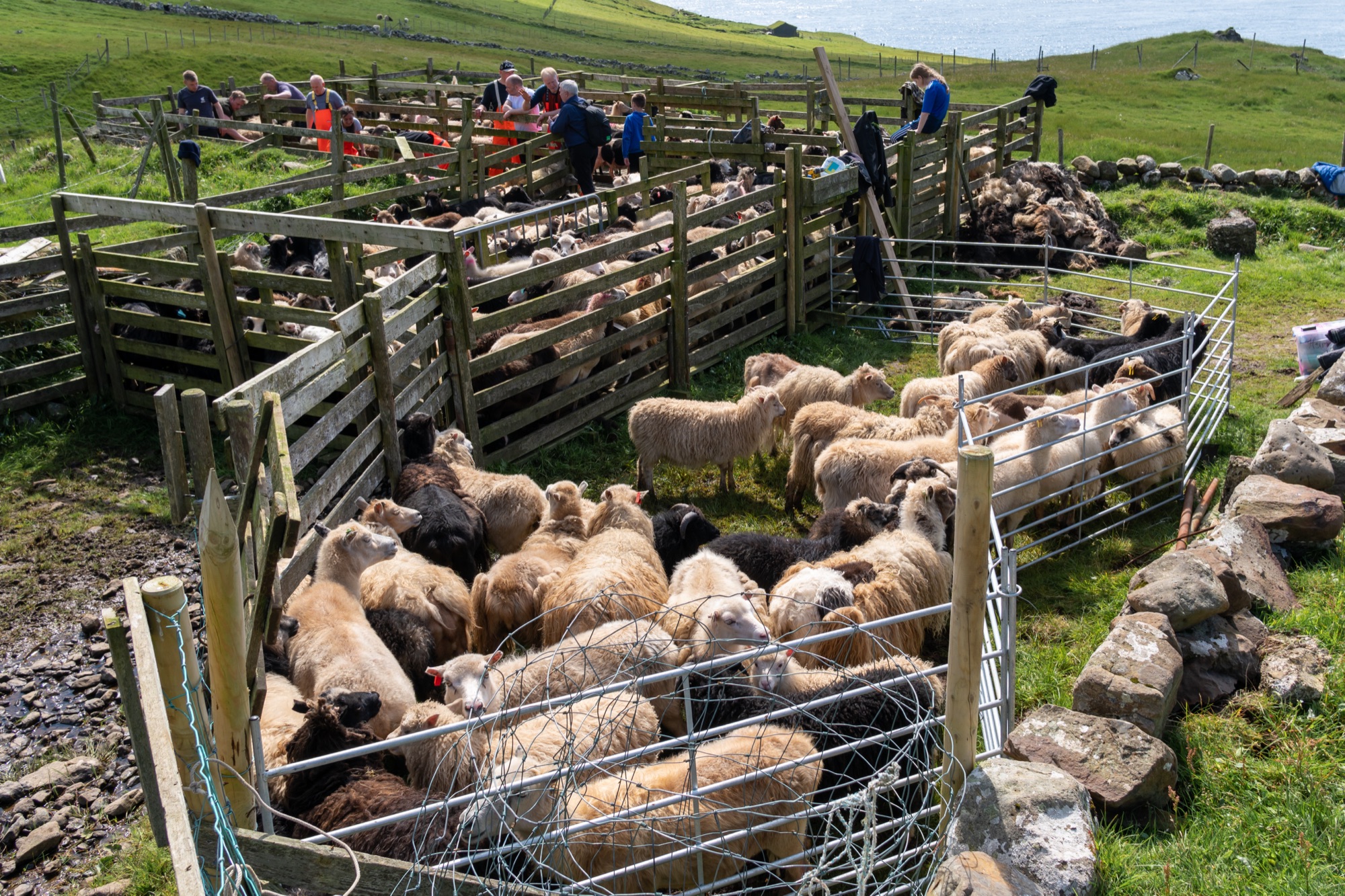
Shearing is paid by volume, so it is fast and nicks are common. On Merino farms, strips of skin are cut from a live lamb’s hindquarters, “mulesing”, frequently without anaesthetic, to prevent flystrike.
Killed as a baby
Most lambs are slaughtered between about ten weeks and six months old. The “spring lamb” on the plate never saw a second spring. A sheep’s natural life is around twelve years; we take almost all of them.
A fraction of 12 yearsTwelve years of life. We take eleven and a half of them.
Source: Defra slaughter statistics; AHDB; RSPCA.
File 07 / 09
Duck
What we’re told“A delicacy.”
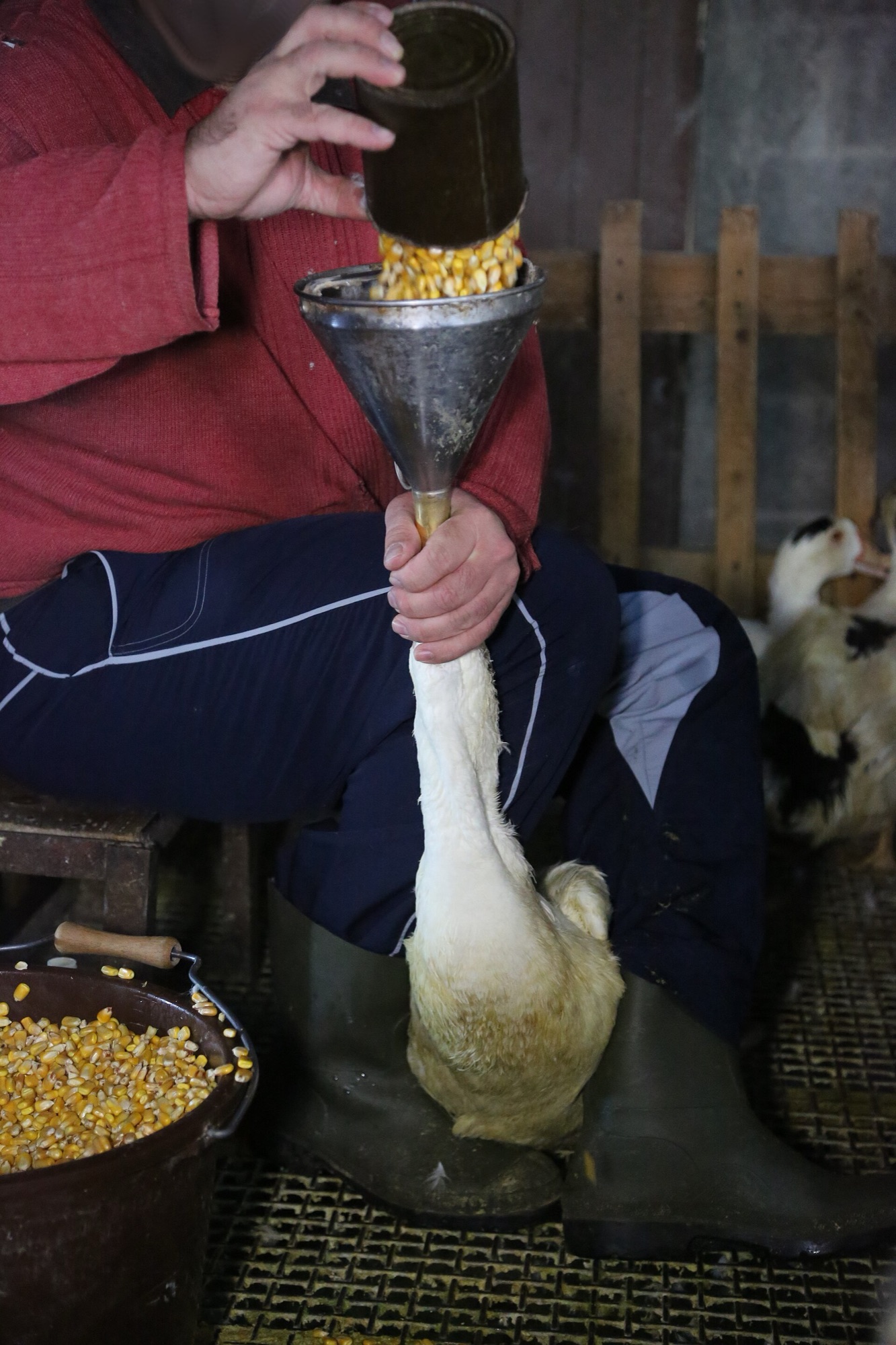
Photo: L214, Éthique & Animaux investigation, France 2012 (CC BY 3.0)
A pipe down the throat, twice a day.
For foie gras, a metal tube is rammed down her oesophagus and grain is pumped directly into her stomach until her liver swells into disease. The photograph on this page is from inside a French farm. It is not the worst one.
A life, start to finish
A water bird, raised without water
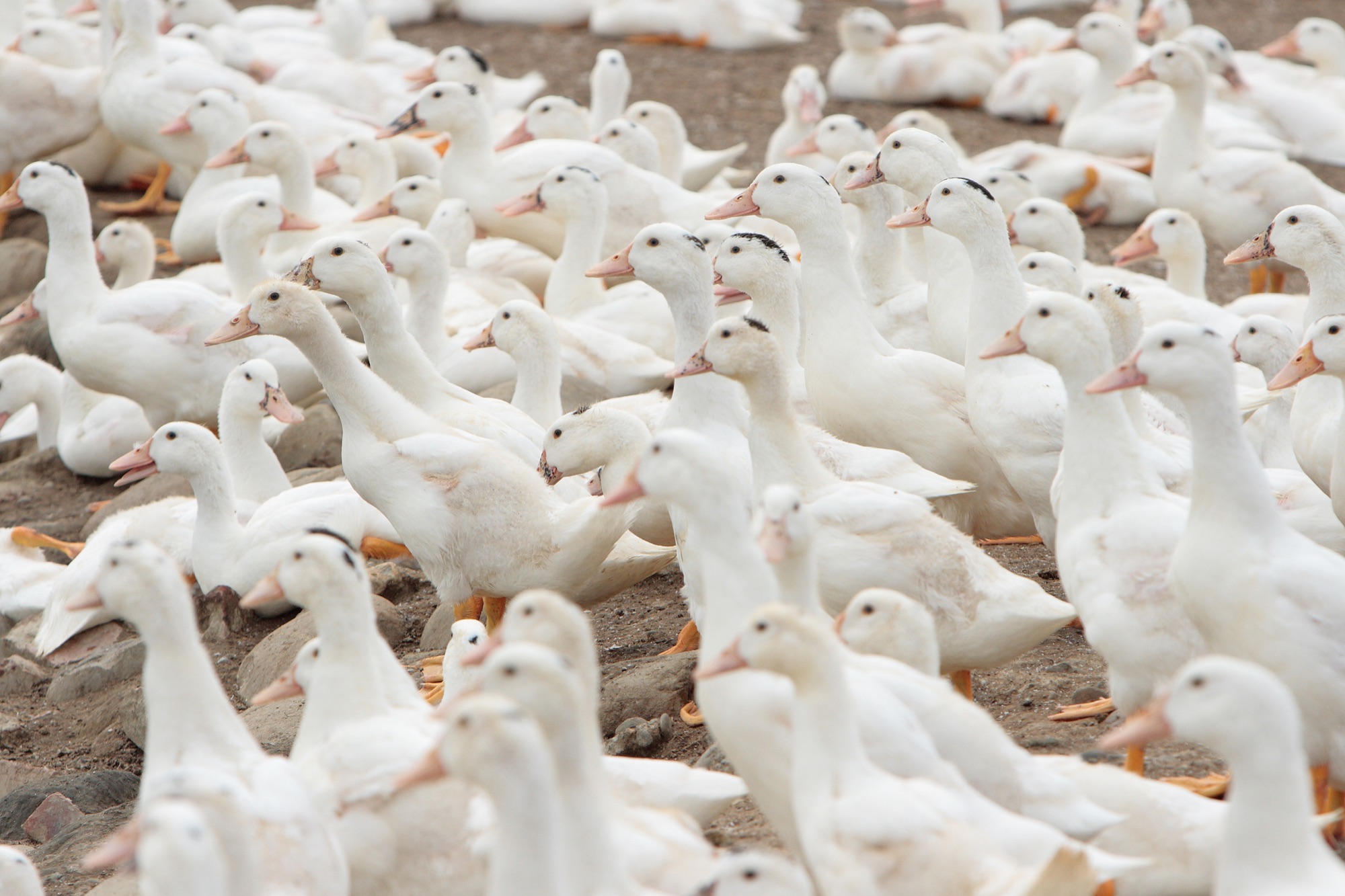
Ducks are waterfowl, they need to swim, dabble and preen. In intensive sheds most never touch open water at all, kept on litter in crowded barns.
A pipe down the throat, two or three times a day
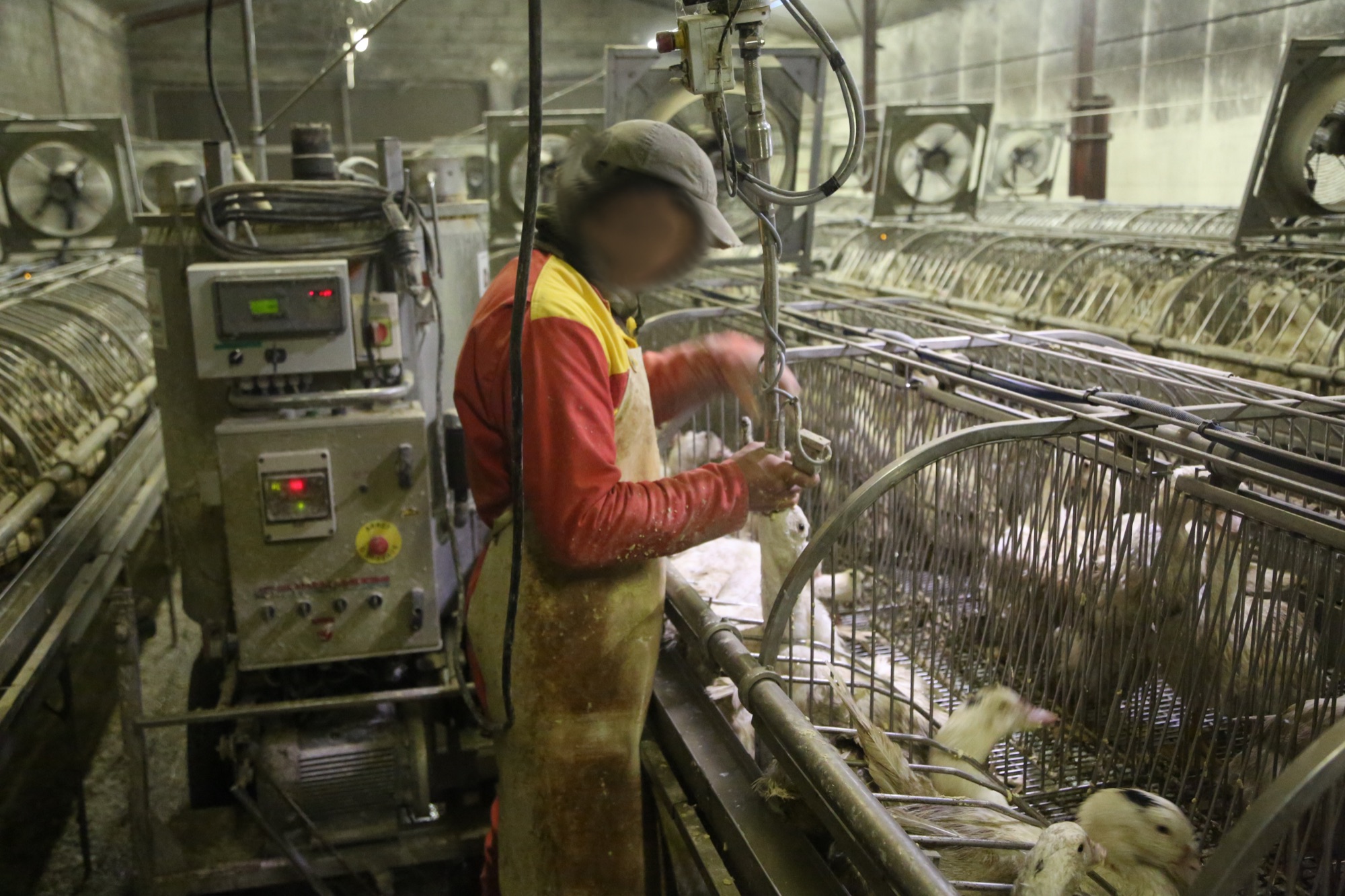
For foie gras, a metal tube is pushed down the oesophagus and grain pumped into the stomach until the liver swells up to ten times its size, a deliberately induced disease, hepatic lipidosis, sold as a delicacy.
A diseased organ, sold as luxuryFeathers, sometimes torn from the living
For down bedding and jackets, feathers are plucked from ducks and geese, in some supply chains from live birds, who are restrained, stripped and left to regrow them before it is done again.
Slaughtered at weeks old
Ducks farmed for meat are killed at around seven weeks. Like chickens, most are shackled, stunned in a water bath and bled, a life measured in weeks.
Killed at ~7 weeksA diseased organ, ten times its natural size, sold as luxury.
Source: EU Scientific Committee on Animal Health and Animal Welfare; Compassion in World Farming.
File 08 / 09
Fish
What we’re told“They don’t feel anything.”
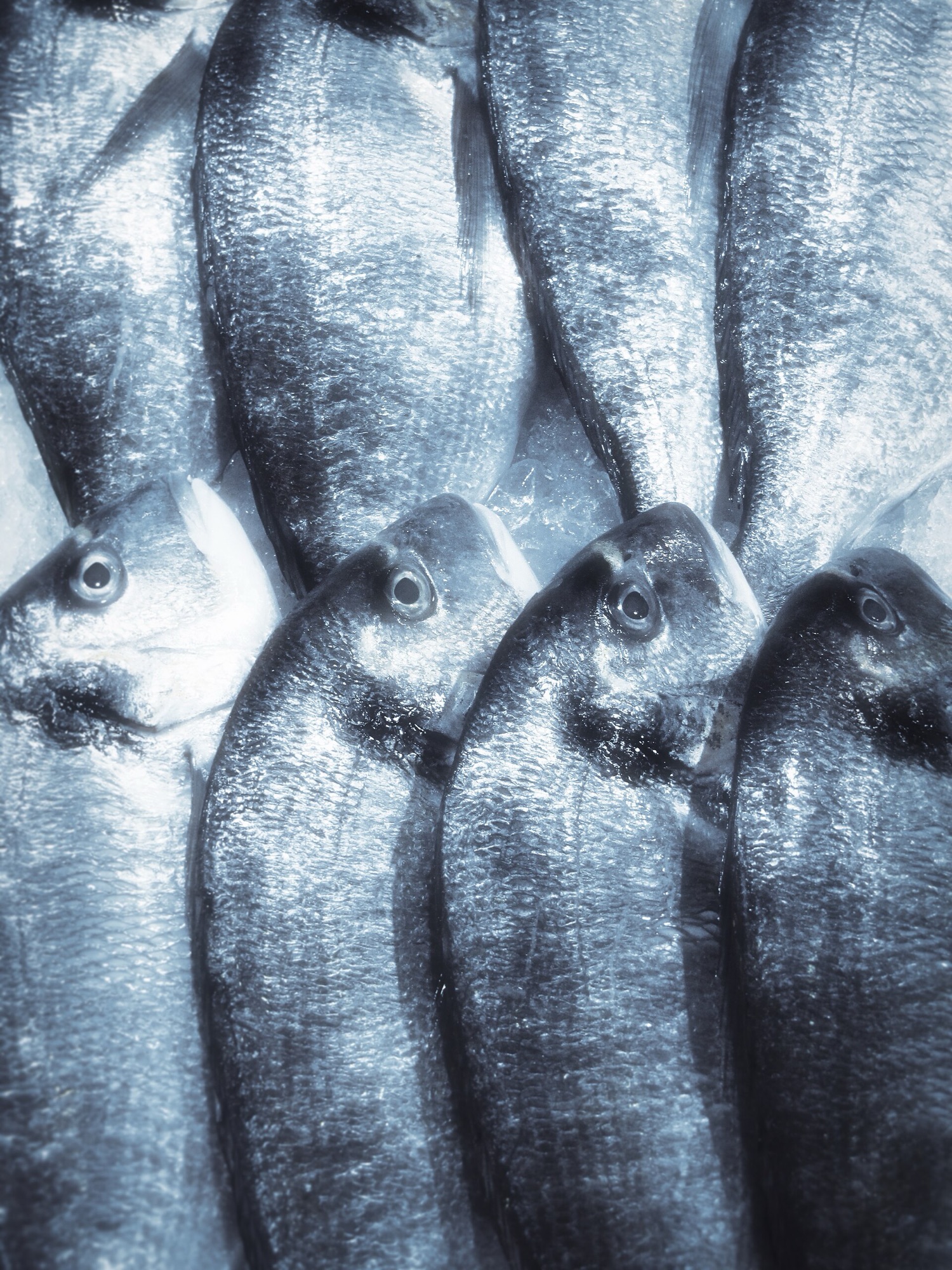
Photo: Edna Winti, Wikimedia Commons (CC BY 2.0)
They feel it. All of it.
Fish have pain receptors and respond to pain much as mammals do; a cleaner wrasse passed a modified mirror test. We kill more of them than every other animal put together, the vast majority with no stunning at all: crushed in nets, or left to suffocate.
A life, start to finish
Dragged up from the deep
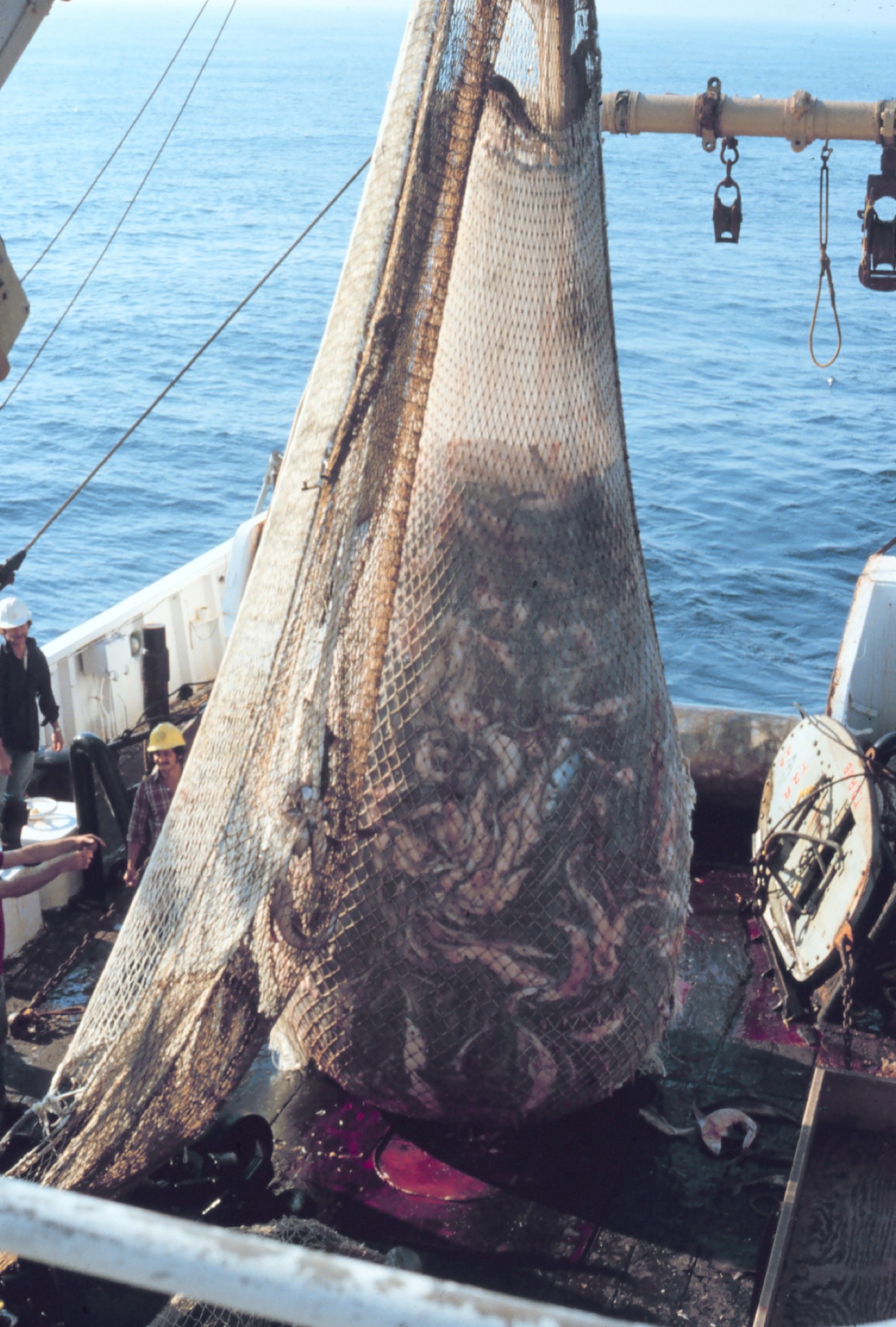
Trawled fish are hauled up so fast their swim bladders rupture and their eyes and stomachs can be forced out by the pressure change. Tipped onto the deck, they are crushed under the weight of the catch or left to suffocate. Almost none are stunned first.
Usually no stunningA lifetime in a crowded cage
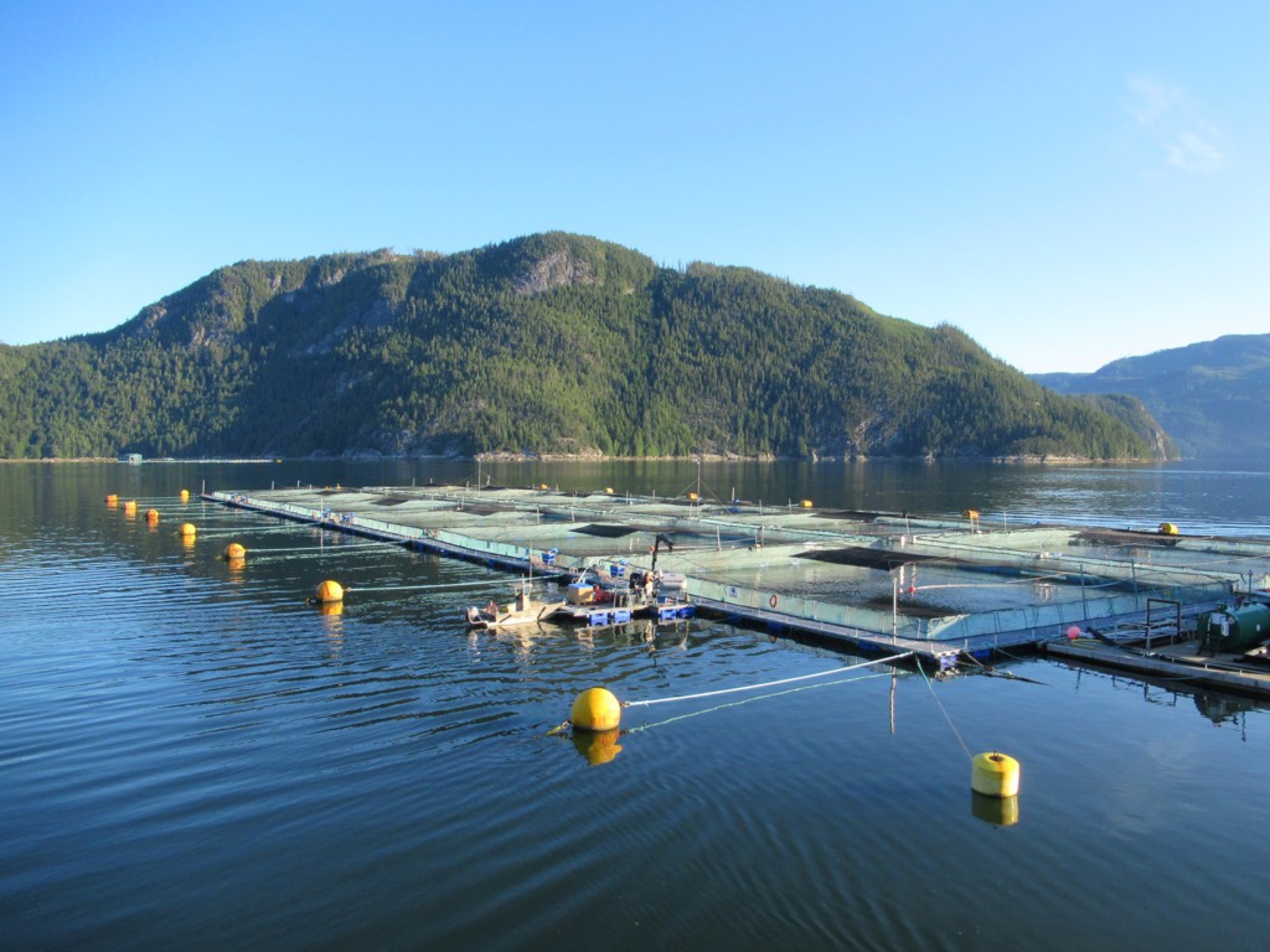
Farmed fish such as salmon spend their lives packed in sea cages, plagued by sea lice and disease, many deformed or dying before harvest. Crowding a fish is no kinder than crowding any other animal.
Pain, not reflex
Fish have nociceptors and opioid receptors and show the behavioural and physiological signs of pain that mammals do. “They don’t feel anything” is a story we tell because there are so many of them, and they cannot scream.
Killed by the trillion
Between roughly one and over two trillion fish are killed for food each year, more individuals than every other farmed animal combined. The number is so large it stops meaning anything. Each was a life.
Up to 2 trillion a yearKilled by the trillion. Almost none of them stunned.
Source: Sneddon et al., Proc. R. Soc. B (2003); Kohda et al. (2019/2022); fishcount.org.uk.
File 09 / 09
Rabbit
What we’re told“It’s necessary research.”
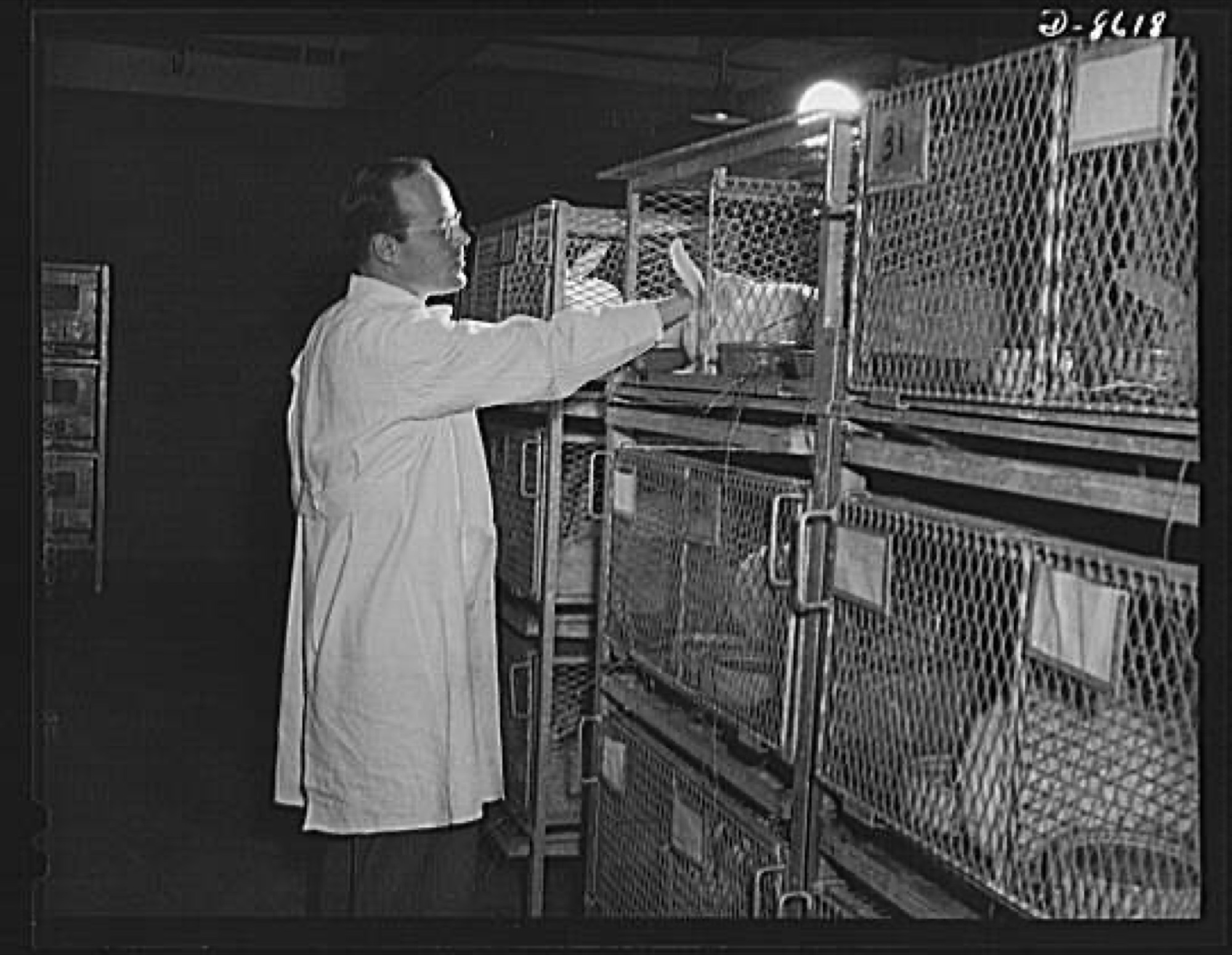
Photo: Howard R. Hollem, archival (public domain), the practice continues
Chemicals dripped into eyes that feel every second.
Cosmetics, cleaning products and chemicals are still tested on animals who cannot blink them away. And it mostly doesn’t even work: the overwhelming majority of drugs that pass animal tests go on to fail in humans.
A life, start to finish
Born for the catalogue
Most laboratory animals are purpose-bred and sold by suppliers, sized and priced like equipment. They are born into the system that will end them.
Held so they cannot blink it away
Rabbits are favoured for eye-irritation tests because they have no tear ducts to wash substances out and pale eyes that are easy to read. They are restrained while chemicals are dripped into the eye and the damage scored over days.
Often no pain reliefForce-fed, dosed, made ill on purpose
Across research, animals are force-fed, injected, made to inhale substances, or given diseases, then observed as they sicken. Much of it is unrelieved by anaesthetic or painkiller.
Killed when the study is
The overwhelming majority are killed at the end of the experiment. An estimated 192 million animals are used in research worldwide each year.
~192 million a yearIt rarely even tells us about ourselves
More than 90% of drugs that pass animal testing still fail in human trials, too toxic, or simply ineffective. We hurt them, and a mouse was never a small person.
We hurt them, and it tells us little about ourselves.
Source: Taylor & Alvarez (2019); clinical attrition data (BIO/Informa); FDA Modernization Act 2.0 (2022).
The only thing that changes is the label.
You met the dog first on purpose. Nothing about the others asks you to feel something new, only to stop making one exception.